

I’ve been a fan of Audio-Technica mics for a long time. When I was a teenager in the 80s, playing in garage bands, I used Audio-Technica microphones.
I liked Audio-Technica’s BP40 mic so much that I recorded the audiobook version of Big Podcast with it. And put it in the promotional video …
But the BP40 microphone is around $500 when you include the shock mount, which many podcasters feel is too much for a microphone.
Fortunately for those who feel this way, the AT2040 model offers a nice middle ground. It’s better than the lower-end ATR2100, considered the standard of low-end podcasting mics, but not nearly as expensive as Audio-Technica’s higher-end models.
Expect to pay about $100.
AT2040 Microphone Review
If you want a budget-friendly microphone that captures clear, focused vocals without bringing room noise forward. The Audio-Technica AT2040 delivers a warm, broadcast style voice thanks to its large diaphragm element and hypercardioid pickup. You get professional sounding recordings with relatively little post-processing.
The metal build is rugged. The package includes a stand mount and adapter, which make it easy to integrate into a desk or studio setup.
TL;DR
⭐️⭐️⭐️⭐️ – Ease of Use ⏱️ – Easy to set up with an XLR interface and immediate usable sound, but you will need decent preamp gain or a mic activator for quieter sources.
⭐️⭐️⭐️⭐️ – Sound Quality 🎙️ – Warm, natural broadcast tone with smooth mids that typically need only light EQ for clear voice presence.
⭐️⭐️⭐️⭐️⭐️ – Directionality and Noise Rejection 🔍 – Hypercardioid pattern keeps background noise and room bleed low so you can record two people in the same room with less interference.
⭐️⭐️⭐️⭐️ – Build Quality 🔒 – Mostly metal construction feels solid and studio ready, with a robust grille and dependable mounting hardware.
⭐️⭐️⭐️⭐️ – Connectivity and Gain 💸 – XLR connectivity offers pro flexibility, but expect to push gain on many interfaces or add an inline booster for optimal levels.
Audio-Technica AT2040
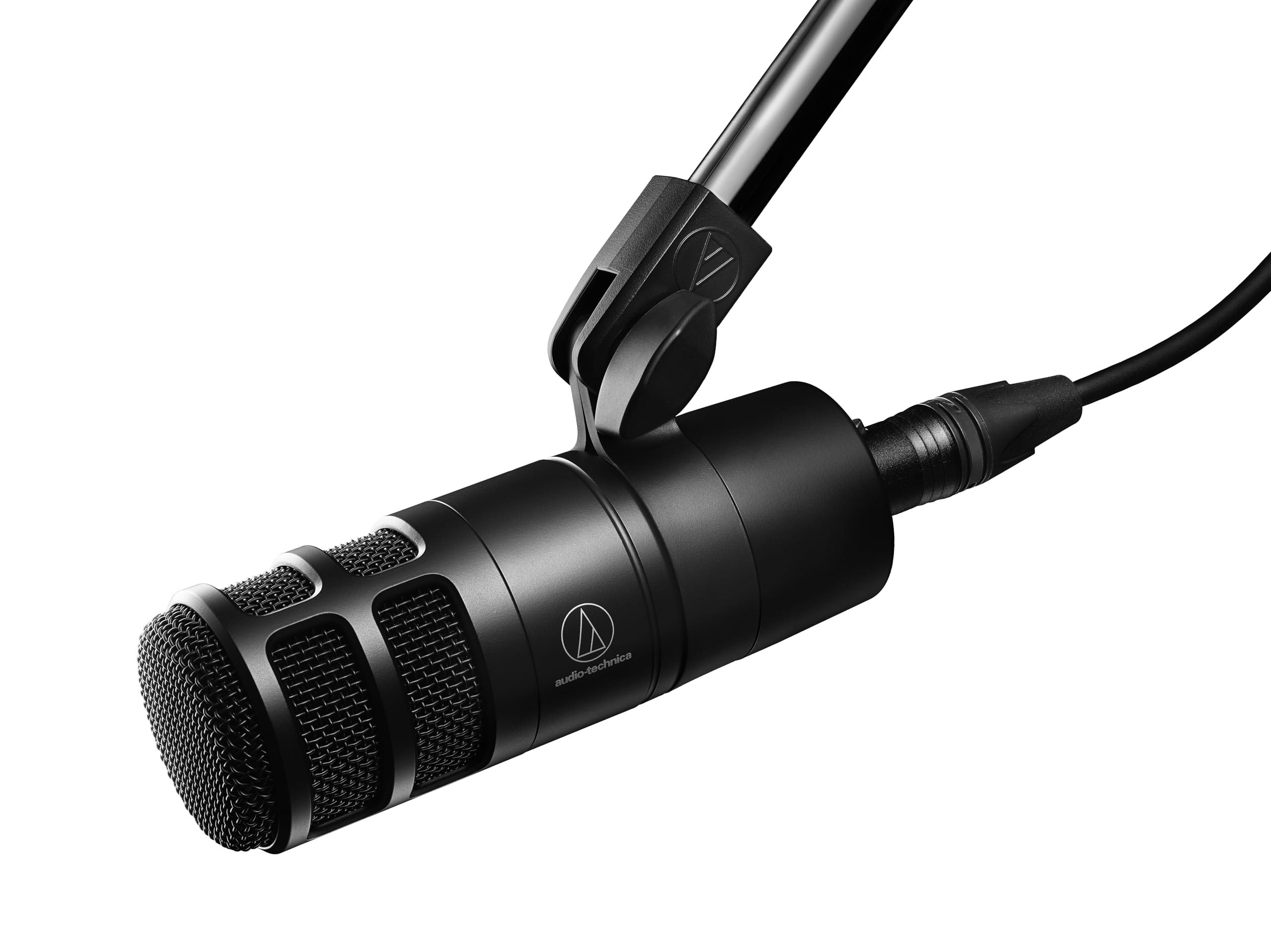
You want a mic that sounds like it belongs in a small broadcast booth without a lot of fuss. The AT2040 gives you a warm, natural vocal tone and a very directional pickup that keeps room noise and off-axis chatter from muddying your recordings.
It ships with a pivoting stand mount, threaded adapter and a soft pouch so you can drop it into a desktop setup quickly. Use it for one-on-one or two-person podcasts, streaming, gaming commentary, or voice-over work and you’ll notice how little EQ it usually needs to sit nicely in a mix. Expect to push your preamp a bit compared with many current mics, but that trade-off is worth it if you value focused speech and a rugged, metal build that feels like it will last.
Pros:
✅ Great off-axis rejection for shared-room recordings
✅ Warm, natural sound that needs minimal EQ
✅ Durable, mostly metal build with useful accessories
✅ XLR connectivity for pro workflows
Cons:
❌ Requires more preamp gain than many mics
❌ Threaded adapter and some small parts are plastic
❌ Not USB plug-and-play without an interface
Value
You get a professional-sounding vocal tool that holds up physically and reduces the amount of corrective editing you need to do, so it pays back in saved time and fewer retakes. For anyone serious about spoken-word content and working with a beginner-grade mic, like Audio-Technica’s ATR2100 model, it’s a practical upgrade that improves production value without needing complicated processing.
How It Feels
When your voice sounds clear and present you feel more confident behind the mic. This mic helps you focus on delivery rather than technical fixes, so you can relax and concentrate on connecting with your audience.
Practicality
The AT2040 fits into standard XLR-based setups and comes with a pivoting mount and adapter so you can position it easily on a desk or boom. If you’re using a basic interface, be prepared to increase preamp gain or add an inline booster for louder sources.
It’s not a plug-and-play USB solution, but if you’re looking to upgrade your mic, most options won’t be. The AT2040 slots naturally into typical home studio workflows and is a great option for both beginner and intermediate-level podcasters.
Key Benefits
Tight hypercardioid pattern reduces room noise and bleed
Large diaphragm delivers a warm, broadcast-style vocal tone
Internal multistage windscreen minimizes plosives and wind
Solid metal construction and handy included mounting accessories
FAQ
Do I Need Phantom Power or an Audio Interface?
The AT2040 is an XLR dynamic microphone, so phantom power is not needed. You will need some form of XLR input such as an audio interface or mixer.
If your interface struggles to provide enough clean gain, an inline preamp or booster like a mic activator can help produce stronger levels without driving noise.
Is this Microphone Good for Podcasting or Recording Two People in One Room?
The AT2040 is tailored for spoken-word work and its hypercardioid pickup helps keep room noise and crosstalk low, which makes it practical for one-on-one or two-person setups in the same space. You should position each mic so the nulls of the polar pattern reduce bleed from the other speaker and keep the capsules fairly close to the mouth for consistent presence. While the pattern is tight, the mic still benefits from a treated recording space and sensible placement to get the cleanest results.
Note you’ll need a mic for each person.
How Do I Get the Best Sound from the AT2040?
Start with close placement and aim the capsule toward your mouth to take advantage of the hypercardioid rejection, and use the built-in multistage windscreen to cut plosives. Adding a small foam windscreen can help keep the grill clean.
Expect to apply light EQ: a gentle high-pass around 80 Hz to remove low thumps and modest mid adjustments to tame any boxiness, and be ready to raise your preamp gain.
If you hear hiss at low levels check your interface inputs and cables first, and consider an inline booster if you need more clean gain rather than pushing interface gain to the maximum.
Wrapping Up
The AT2040 is a strong choice if you want a broadcast-style dynamic microphone that keeps background noise under control and produces a warm, natural vocal tone.
If your workflow uses an XLR interface and you value focused speech capture for podcasting, streaming, or voiceover work the AT2040 gives you professional sounding results with minimal tweaking.
It’s a nice option for around $100.